
If as critics point out, the environmental impact assessment study was commissioned only after the auction process got underway with not all the stakeholders getting to know of it, then the government has already compromised the trust it could have enjoyed with Kerala's public including its coastal communities, points out Shyam G Menon.
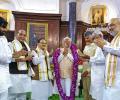
The preferred format would be for the top BJP leadership in the government to reach out to the alliance leaders on a case-to-case basis.

The visitor returns not just with the jewel-like beauty of the country imprinted on the mind, the body rejuvenated by hot stone massages, but also with the captivating stories and myths that are built into every important structure -- whether a tourist magnet or an off-the-beaten track spot.

In an advisory, the Indian Medical Association (IMA) also appealed to people to take COVID-19 vaccines, including the precaution dose, and follow Covid-appropriate behaviour such as using masks in public places and maintaining social-distancing norms to 'overcome the impending Covid outbreak'.

'In the new coalition government, India's reform agenda may prioritise job creation and factor market reforms.'

Bessemer Venture Partners has closed $350 million in capital for its second dedicated India fund to back founders in the region, who build enduring companies.
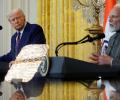
'But I don't think the government is in a great hurry to sign the BTA.'

Stocks of public sector undertakings (PSUs) have been on fire in the past year as investors cheered an improvement in key operating metrics and embraced counters of these state-owned enterprises, analysts suggest. The S&P BSE PSU Index has gained over 90 per cent in the past year, rising much higher than the S&P BSE Sensex, which has rose nearly 19 per cent during this period, according to ACE Equity data. The BSE PSU Index, reports show, has delivered a compound annual growth rate (CAGR) of 28 per cent (including dividends reinvestments) over five years and risen by almost 60 per cent in the past year.

It was a protest which held a mirror to the government of a state taking pride in its commitment to democracy, gender equality and social indices.One person, who in his employed days had known governments and political parties at close quarters, told me that public perception of how the Kerala government handled the ASHA workers' strike had been terrible, reports Shyam G Menon.

The Union Cabinet has approved amendments to the General Insurance Business (Nationalisation) Act, paving the way for privatisation of government-owned insurers. The amendments, approved by Cabinet, will remove the clause for the Centre to hold at least 51 per cent in public sector insurance companies at any given time. It will also have an enabling provision for the transfer of management control from the government to the potential buyer of the public sector insurance company. The finance ministry will move amendments to the insurance Act in the ongoing Parliament session.
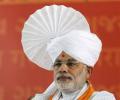
Indeed, this is one policy area where the Modi-led government is different from the one that was headed by Atal Bihari Vajpayee.

Banks in India must have a modern approach, suggests a panel comprising of banking bigwigs.

India has its share of both large tech companies and large national laboratories, but why is it that these don't seem to be at the forefront of any innovation news headlines? asks Ajit Balakrishnan.

The Left parties which had raised the issue were not satisfied with his reply and walked out and they were joined by Samajwadi Party.

As RBI governor, Sanjay Malhotra will have to give the highest priority to the interest of the economy while deciding on the growth-inflation trade off at Mint Street.

'Over the next 12 months, it will be difficult to make 15 to 20 per cent return in the markets as the valuations appear stretched.'

A delegation of high-level executives from US public pension funds (non-profit and government sectors) is visiting India next week to assess and familiarise themselves with the investment opportunities in the country. These executives belong to various American states and cumulatively represent $1.8 trillion in assets under management (AUM) invested across the US and global markets. The United States (US) mission to India, which includes its embassy and consulates and the Department of Treasury, along with India's Ministry of Finance and the National Investment and Infrastructure Fund (NIIF), is hosting the delegation.

The growth was primarily driven by domestic investments, which accounted for 60 per cent of the total inflows during the first quarter of the financial year.

Trump's sweeping tariffs and penalties on China-built ships have turned global shipping into the front line of economic war, observes Shyam G Menon.

Two men were hospitalised after they set themselves afire on Friday amid a bandh call in Madhya Pradesh's Pithampur against the planned disposal of 337 tonnes of Union Carbide waste in the industrial town, an official said.

The government on Monday published a draft data policy for public consultation, which says all data collected, generated, and stored by every government ministry and department will be open and shareable barring certain exceptions. Also, detailed datasets that have undergone value addition could be monetised by the government. The policy document, called "Draft India Data Accessibility & Use Policy 2022", prescribes that a regulatory authority called the Indian Data Council (IDC) and an agency by the name India Data Office (IDO) will oversee framing metadata standards and enforcement, respectively.

The new government that presents the full Budget for 2024-2025 in July should be ready to restructure the way divestment is managed and implemented, proposes A K Bhattacharya.
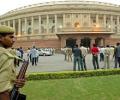
The Union Cabinet on Wednesday decided that 10 per cent of the government's stake in Coal India Ltd would be sold. Similarly, the sale of five per cent of its stake in ONGC and 11.4 per cent in the hydropower public-sector unit, NHPC, has been cleared.
If the concerns over risking political capital are overcome, the long-term gains for the Indian economy will be immense, asserts A K Bhattacharya.

Air India sale will give a boost to India's privatisation drive, the Economic Survey said on Monday, as it suggested redefining the public sector role in business enterprises to encourage private participation in all sectors. The government earlier this month handed over ownership rights in national carrier Air India to Tata Group for Rs 18,000 crore. The amount includes the takeover of the debt burden of Rs 15,300 crore and another Rs 2,700 crore in cash.

India SME Forum, an organisation for small and medium businesses, has called for creating a dedicated fund of Rs 5000 crore for the export capacity development, promotion, and marketing of Micro, Small & Medium Enterprises (MSMEs) in its Budget recommendation. The forum for MSMEs with over 98,000 members said that to enhance India's global competitiveness and increase its market share in global exports, it was "crucial to increase the number of active exporters and enable at least 3-4 lakh first-time micro, small, and medium exporters while supporting them in promoting Indian products globally."

'Inter-ministerial coordination, information on the proposed PSUs, and due diligence are taking longer than expected to conclude the process.'

Santosh Kamath, partner (infrastructure and government services), KPMG in India, expects an extension of a tax holiday for the sector.

If the DMK is able to sustain the momentum until the assembly polls, the AIADMK especially and the PMK and possibly the infant TVK too would find it hard to sign up with the BJP, explains N Sathiya Moorthy.

Ahead of Trump's inauguration here on January 20, the debate on foreign guest workers visas for highly skilled professionals, the H-1B, has intensified which has literally created divisions in both the Democratic and the Republican parties.

For Yogi Adityanath the successful management of the fair is a crucial part of building 'Brand UP' and making the state a $1 trillion economy.

'The corruption charges in FCI are not the first and won't be the last.'

Delhi's air quality deteriorated significantly on Monday, with areas like Dwarka, Mundka and Najafgarh recording an AQI of 500, the worst this season. The city's overall AQI reached 491, triggering the implementation of the Graded Response Action Plan (GRAP) Stage-IV restrictions in Delhi-NCR. Doctors warned of health risks, urging people to wear N95 masks and avoid outdoor activities. The Supreme Court questioned the Delhi government on its anti-pollution measures and warned against scaling down preventive measures without its permission. Delhi Chief Minister Atishi accused the BJP-led central government of political maneuvering while neglecting stubble burning in states it governs. Meanwhile, the city enforced stricter pollution control measures, including a ban on truck entry and suspension of construction activities. Air purifier sales surged, reflecting the public's concern over the severe air pollution.

The challenge is to enhance opportunities for people to generate livelihoods through entrepreneurship, both big and small, argues R Jagannathan.
What stood out in his 15-year journey as a member of the political executive at the Centre was his glowing record as India's most successful and effective finance minister. Both as prime minister and finance minister, he understood the importance of gradualism, except when the economy or the polity was in a crisis.

'There is a difference between a politician and leader.' 'A politician will have his pound of flesh first and do everything else later.' 'A leader will sacrifice everything to help people.'
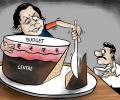
Niti Aayog will prepare the next list of central public sector companies for disinvestment in the next few weeks, its vice chairman Rajiv Kumar said on Thursday and expressed hope that the proposed asset reconstruction and management companies to address banks' bad loan woes will do a good job like the UTI. Days after Finance Minister Nirmala Sitharaman announced the Union Budget for 2021-22 laying out various measures (including disinvestment proposals) to bolster the pandemic-hit economy, Kumar also emphasised that the Modi government has shown consistent commitment for the welfare of farmers and for the improvement of the agriculture sector. "Now the process has begun... We will complete preparation of the next list in the next few weeks, we have got the marching order," Kumar said about the list of public sector companies for the next round of stake sales.

Prime Minister Narendra Modi on Wednesday said the government has no business to be in business and his administration is committed to privatising all PSUs barring the bare minimum in four strategic sectors. "It is government's duty to support enterprises and businesses. But it is not essential that it should own and run enterprises," he said. Modi also said the Centre's policy is to either monetise or modernise public sector enterprises, with the intent that the government has "no business to be in business".

As the Drugs Controller General of India (DCGI) is set to crack down on companies to ensure compliance with printing QR codes on top-selling brands to curb counterfeiting, top pharma companies say they welcome the regulator's mandate and that they are on track. They also view it as a positive step to ensure patient safety. Sheetal Arora, CEO of Mankind Pharmaceuticals, which has already adopted QR codes in 20 of their products, stated: "We strongly advocate for mandatory implementation of barcodes and QR codes on medicines as this initiative will not only protect patients but also strengthen the integrity of our healthcare system by reducing circulation of counterfeit drugs."

The issue is likely to be discussed on Thursday at a meeting of Sebi's board, which would also be apprised of the impact of the Finance Ministry's decision for not agreeing to such a proposal from the capital markets regulator, sources said.
